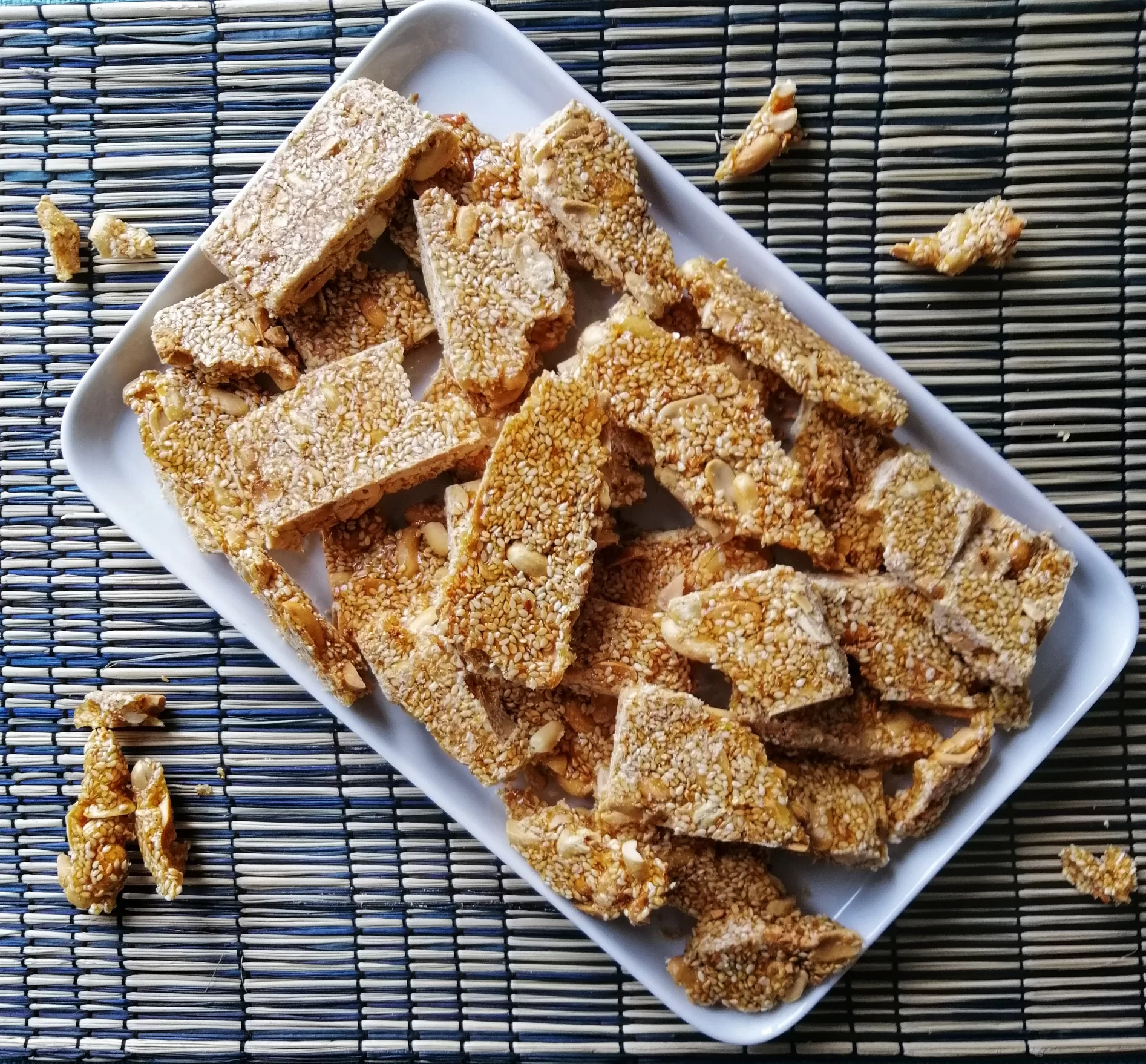
Some sweets are more than just dessert, they’re time machines. One bite of pastelaki, the sticky-sweet Cypriot treat made from sesame and honey, and you’re instantly transported. To a sun-drenched village courtyard, to the laughter of yiayias preparing traditional recipes, to a Cyprus where food was medicine, ritual, and celebration.
At Greek Food Alchemist, we believe in honoring the old while embracing the new. And pastelaki is one of those ancient treasures that continues to enchant every generation.
A Taste That Tells a Story
The first time I tasted pastelaki was in my grandmother’s kitchen. The scent of toasted sesame filled the air, and she stirred a bubbling mixture of honey with that kind of slow, intuitive grace you only learn by doing something hundreds of times.
“It’s good for you,” she said, pressing a piece into my hand. “Sesame and honey, ancient food of the gods.”
She wasn’t wrong. Pastelaki isn’t just delicious, it’s deeply rooted in the Mediterranean diet and Hippocratic wisdom. High in healthy fats, natural sugars, and minerals, it was once eaten by warriors and travelers for energy. Today, it’s still used as a nourishing snack, a thoughtful gift, or a guilt-free sweet for mindful eaters.
What Is Pastelaki?
Traditionally made with just two or three ingredients, honey, sesame seeds, and sometimes a hint of lemon or almonds, pastelaki is Cyprus’s answer to an energy bar. But unlike modern bars packed with additives and synthetic sweeteners, this treat keeps it pure and simple.
It’s chewy yet crunchy, naturally gluten-free, and bursting with nutty, golden flavor. Whether sliced into elegant squares or broken into rustic chunks, it’s always welcome at the table.
Why We Still Make It Today
At Greek Food Alchemist, we revive traditional recipes not just for nostalgia, but because they still work—on a practical and soulful level. Pastelaki is easy to make, easy to store, and makes the perfect healthy snack or after-dinner bite with herbal tea.
It’s also a wonderful way to teach children about food heritage, gift something meaningful, or simply treat yourself with intention.
A Tradition Worth Sharing
If you’ve never made pastelaki, now is the time. It takes only a few ingredients and even fewer minutes, but what you get is more than just a sweet, it’s a story you can taste.
So the next time you’re craving something sweet, skip the processed stuff and reach for a tradition that’s stood the test of time.
Let Greek Food Alchemist guide you into your own kitchen rituals, with ancient flavors, modern magic, and recipes like pastelaki that feed both body and soul.
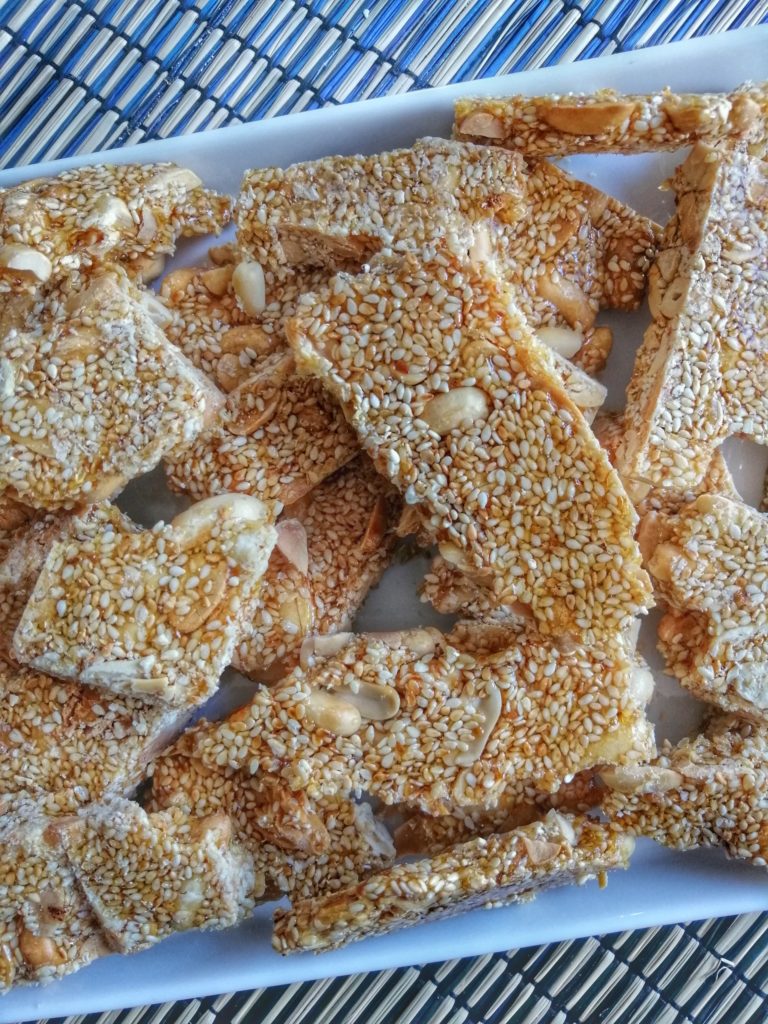
Step 1 Pre -heat the oven at 180ºC. Remove the skin from the monkey nuts and place in a tin. Roast in the oven until golden. Be careful to mix them every now and then as they can burn easily. Once roasted, remove from the oven and let them cool Step 2 Place the sesame seeds in a pan. Toast them until golden. Make sure to stir often as they can burn easily too. Once toasted, place them in the same bowl as the nuts and let them cool. Step 3 Line a large tin with parchment paper. Step 4 Place the sugar, honey and white vinegar in a large cooking pot. Keep the temperature on high and let the ingredients melt. You want the sugar to start caramelising and to be completely dissolved. About 10-15 min. Step 5 Mix in the nuts and sesame seeds and mix well. All the nuts and seeds should be covered in the caramel Step 6 Place the mixture in the tin with the parchment paper and quickly press it flat. I used a rolling pin. You can choose the thickness you like. As soon as you have your desired thickness, start cutting the pasteli in the shapes you wish. I opted to let it cool and snap it in various shapes once cold. Step 7 Let it cool and enjoy! You can use any nuts you like like almonds, cashews, walnuts etc. Make sure to roast them though. I know the vinegar is a weird addition but trust me it helps with the crunchiness. I would love to hear from you!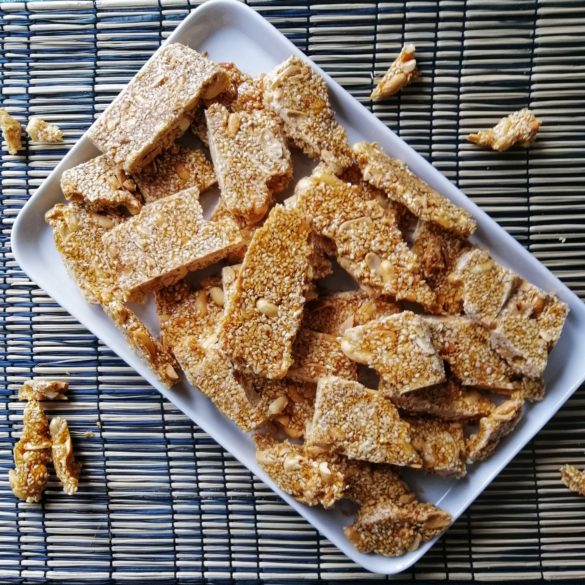
Ingredients
Instructions
Notes
