
Traditional Cypriot Halloumi Cheese Recipe – How to Make Halloumi at Home
Halloumi cheese! Just the name makes my heart (and taste buds) happy. For the past couple of years, I’ve been gathering the courage to finally make my own halloumi from scratch. The pandemic offered me the gift of time and space to get creative in the kitchen, and I decided to revisit the traditions I grew up with.
I had done my research, read up on how to make halloumi cheese, and remembered so vividly my yiayia, mum, and aunties making it when I was little. Those memories gave me the courage to try it myself.
And let me tell you — making traditional halloumi at home is one of the most rewarding kitchen projects you’ll ever do.
Childhood Memories of Homemade Halloumi
My grandmother lived in a refugee house, the home my family was given after the war in Cyprus. It was small and dark, but it was full of love — and it became the center of my childhood. I spent every day after school there while my parents were working.
In those early years, my grandparents raised chickens and rabbits. My grandmother Milia was a powerhouse of tradition. She made sausages, tomato passata, and fresh bread daily. And yes — she also made her own homemade halloumi cheese.
I can still picture it now: she had a big black cauldron (which looked a bit like a witch’s pot to me as a child!) and would get fresh sheep’s milk from the neighbor, who owned a small farm. With just milk and rennet, she created golden, squeaky cheese that brought the whole family together.
Those simple, humble traditions are what inspired me to start making my own halloumi at home.
What You Need to Make Halloumi Cheese
One of the most beautiful things about halloumi is its simplicity. You don’t need complicated ingredients — just patience and care.
For this halloumi recipe, you’ll need:
- Fresh sheep’s milk or goat’s milk (or a mixture of both — the most traditional way!)
- Rennet (to help the milk set and form curds)
- Salt for flavor and preserving
Did you know? Halloumi is often paired with fresh ricotta. When making halloumi, the whey left behind can be used to create delicious, creamy ricotta cheese. Nothing goes to waste.
How to Make Traditional Halloumi Cheese
The process of making homemade halloumi is calming, almost meditative. Here’s a simplified overview:
- Warm the milk gently in a large pot.
- Add the rennet and allow the milk to set into curds.
- Cut the curds into small pieces and heat them again until they firm up.
- Drain the curds into a cheesecloth and press them into blocks.
- Simmer the cheese blocks in whey until they rise to the surface — this is the secret to halloumi’s squeaky texture.
- Sprinkle with salt and fold (traditionally, fresh mint leaves are tucked inside each piece).
And just like that, you’ve got your own authentic Cypriot halloumi cheese.
While the halloumi is draining, you can also make ricotta from the leftover whey. Serve it fresh with a sprinkle of cinnamon and sugar, a drizzle of honey, or use it in Cypriot pourekia (sweet pastries filled with ricotta).
Why Halloumi Is So Special
Halloumi is more than just cheese. It’s part of Cypriot identity and culture. Traditionally, it was always made with a mix of sheep and goat’s milk, though nowadays you’ll also find versions made with cow’s milk.
While those supermarket versions are convenient, nothing compares to the flavor and texture of homemade halloumi — especially when made with local sheep or goat’s milk. Next time you buy halloumi, check the label and make sure it’s made in Cyprus for the most authentic taste.
Grilled, fried, or even eaten fresh, halloumi has a unique squeaky bite that makes it unlike any other cheese in the world.
Bringing Tradition Back to the Kitchen
For me, making halloumi from scratch isn’t just about the cheese. It’s about honoring the women in my family who passed down these traditions — my grandmother, my mother, and my aunties.
Food has always been their way of showing love. And now, I get to continue that tradition by sharing these recipes with my own family, and with you.
So, if you’ve ever been curious about making your own cheese, I encourage you to try this traditional Cypriot halloumi recipe. It’s simple, delicious, and connects you to generations of tradition.
Final Tip
If you try this recipe, make sure to also check out my pourekia recipe, which is perfect for using up the ricotta you make alongside your halloumi.
Halloumi, ricotta, fresh bread, and a drizzle of honey… is anyone else drooling with me?
Dina x

Step 1 Poor 14L of milk in a big pot. Make sure to measure how many litres your pot can take before starting the process. Keep 1L to make the ricotta. Step 2 Heat the milk to 35 ºC and turn of the heat. Step 3 Place the rennet in a small bowl and add 50ml of un-chlorinated water and 1 tsp salt. Dissolve and add to the milk. Stir well and cover the pot for 40 minutes. The curd is ready when it's firm and non sticky to the touch. Step 4 Cut the curd into many squares making sure to cut the curd all the way through. Then using your hand start breaking the curd into smaller pieces. Step 5 Turn the heat on and wait for the curd to reach 40ºC. Then turn the heat on low, for 10 minutes. Stir every now and then to make sure it doesn't stick. Step 6 Gather all the dried curd and place in molds or the cheesecloth. Press firmly and place a tray or a plate on top. Then place something heavy on top to help the cheese drain better. Return any drained whey in the pot and let the cheese rest and drain further. Step 7 To prepare the ricotta: Turn the heat on for the whey to reach 65ºC. Make sure you have removed all of the curd using a sieve. Then add the reserved 1 L of milk. Continue to heat the whey for it to reach 85ºC, stirring every now and then. When it reaches 85ºC, turn the heat to low and wait for the ricotta to appear on the top. Wait for 10 to 15 more minutes and gather all the ricotta using a sieve. Place in a mold and let it drain. Remove from the mold when it has completely drained. Step 8 Remove the halloumi cheese from the molds and cut in pieces of about 1,5cm across. Place the cheese carefully in the whey to bring to the boil. At the beginning the cheese will sink to the bottom but once it's ready it will float on the surface. Keep the heat on low and make sure they don't stick on the bottom of the pot. Once every piece is floating on the surface let it cook for 15 more minutes. Step 9 Remove the halloumi cheese from the pot making sure to drain them. Wait 2 minutes and sprinkle with some salt and dried mint. Fold in the middle and enjoy! As you can see it's a pretty straightforward process and if you follow the steps and keep to the temperature as in the steps you will definitely have some halloumi cheese and ricotta to enjoy! If you use sea salt and realise that you have added more than you want, you can easily scrape it off. If you are using cooking salt be careful not to add a lot. You can store the cheese in an airtight container in the fridge or in airtight bags and freeze them. Enjoy the ricotta with some cinnamon and sugar or honey. Alternatively, sprinkle some salt and enjoy with a piece of bread, tomatoes, olives and cucumber.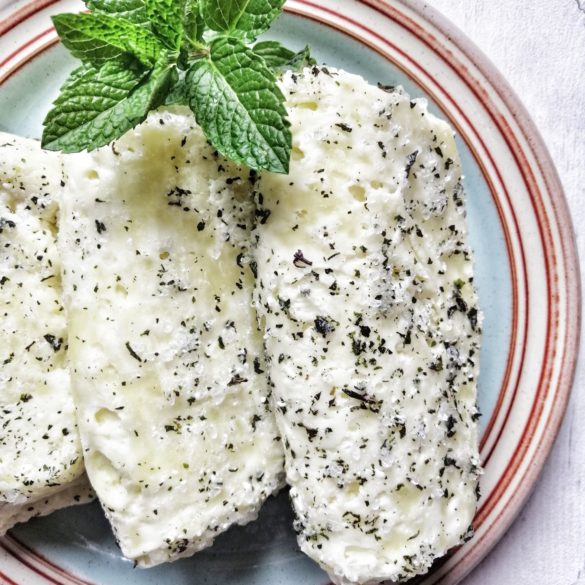
Ingredients
Instructions
Notes
